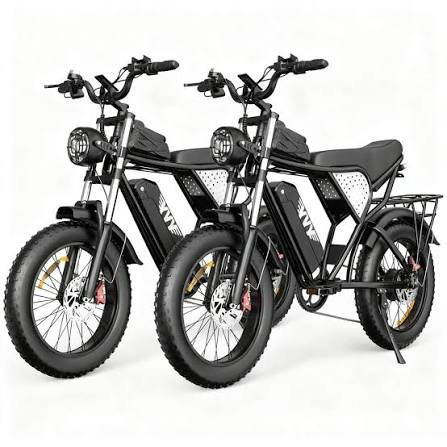
Choosing the right electric bike depends on more than motor power or design. Battery capacity, riding distance, charging frequency, and overall performance all play important roles in determining whether an e-bike is suitable for your lifestyle. For riders considering a long-range fat-tire electric bike, comparing the standard K20 with the upgraded K20 Pro is an important step.
The YVY K20 vs K20 Pro comparison helps buyers understand the differences between these two models and decide whether investing in additional battery capacity and dual-motor performance makes financial sense. While both bikes are designed for versatile riding, their configurations target different riding requirements.
The standard K20 offers a practical combination of motor power and battery capacity for everyday transportation and recreational use. The K20 Pro, on the other hand, focuses on extended range, greater battery capacity, and additional motor capability.
But does the upgraded model offer enough practical benefits to justify its higher price? Let’s explore the differences.
Understanding the YVY K20 and K20 Pro
The YVY K20 is designed for riders who want a versatile electric bike for commuting, recreational journeys, and mixed-terrain riding. It features a 1500W brushless motor, a removable 48V 20Ah battery, and 20-inch fat tires.
Its combination of suspension, hydraulic dual brakes, and Shimano 7-speed gearing makes it suitable for different riding environments. Whether traveling through city streets or exploring less-developed roads, the K20 offers a balanced configuration for everyday use.
The K20 Pro takes the concept further with a dual-motor configuration and two 52V 20Ah batteries, providing 40Ah of combined battery capacity. This larger energy reserve is designed for riders who regularly cover longer distances and want fewer charging interruptions.
The main distinction is therefore the intended riding experience. The K20 focuses on practical everyday performance, while the K20 Pro is designed for riders who prioritize extended riding capability.
Battery Capacity: The Biggest Difference
Battery capacity is one of the most important considerations when choosing an electric bike. It determines how much electrical energy is available to power the motor and support different riding modes.
The standard K20 comes with a 48V 20Ah removable battery. This configuration provides a useful balance between battery capacity and everyday convenience.
The K20 Pro features two 52V 20Ah batteries, offering a combined capacity of 40Ah. This represents a substantial increase in available battery capacity compared with the standard K20.
For riders who regularly travel long distances, this difference can be particularly valuable. A larger battery reserve provides more flexibility when planning journeys and can reduce the need to recharge as frequently.
However, actual riding distance depends on several factors, including rider weight, road conditions, tire pressure, riding speed, temperature, and pedal-assist settings.
Consequently, advertised range figures should be considered manufacturer estimates rather than guaranteed real-world results.
Single vs Dual Battery YVY Ebike: Which Is Better?
When choosing between a single vs dual battery YVY ebike, buyers should consider their daily riding habits, charging opportunities, and expected travel distances.
A single-battery configuration is generally easier to manage. It requires one battery to be maintained and charged, making it a practical choice for riders with predictable commuting schedules.
For example, someone traveling to work, visiting nearby locations, or enjoying occasional weekend rides may find the standard K20’s battery capacity sufficient.
However, riders who regularly undertake extended journeys may appreciate the additional capacity of a dual-battery system.
The YVY K20 vs K20Pro comparison is particularly relevant here because the K20 Pro’s dual 52V 20Ah battery arrangement offers a larger energy reserve for riders who prioritize longer-distance capability.
There are also practical considerations. Two batteries can add weight to the bicycle, which may affect transportation, storage, and handling when the bike is not being ridden.
Buyers should also check how the manufacturer recommends charging and managing both batteries. Understanding the charging equipment and battery compatibility before purchasing can help avoid unnecessary complications.
Ultimately, a dual-battery system is most valuable when the additional capacity serves a genuine purpose in your riding routine.
Motor Configuration and Riding Performance
Battery capacity is not the only difference between these models. Their motor configurations also influence the type of riding experience they are designed to provide.
The standard K20 features a 1500W brushless motor. This motor configuration is intended to deliver versatile performance for commuting and recreational riding.
The K20 Pro features a dual-motor setup, positioning it as a more performance-oriented option within the K20 family.
Having two motors can provide additional driving capability, particularly when dealing with demanding riding conditions. However, actual performance depends on controller settings, available power, terrain, rider weight, and battery condition.
It is also important to distinguish between rated and peak motor output when reviewing manufacturer specifications. A higher advertised wattage does not automatically mean better performance in every riding situation.
For everyday city commuting and moderate recreational use, the standard K20 may already provide sufficient capability. Riders looking for additional motor support may find the K20 Pro more attractive.
Is the K20 Pro Upgrade Worth the Investment?
The K20 Pro upgrade makes the most sense when its additional features directly address your riding requirements.
Consider someone who commutes a relatively short distance every day and charges their electric bike overnight. In this situation, the standard K20 may offer better overall value because the additional battery capacity of the Pro may rarely be needed.
Now consider a rider who regularly travels longer distances, explores outdoor routes, or spends several hours riding without convenient access to charging facilities. For this person, the K20 Pro’s larger battery configuration could provide a meaningful advantage.
The upgrade may also appeal to riders who want the additional capability of a dual-motor system.
However, buyers should evaluate the complete ownership cost before making a decision. The purchase price, battery maintenance, replacement costs, charging arrangements, and warranty coverage should all be considered.
Paying more for additional capabilities only makes sense when those capabilities improve your actual riding experience.
Charging Convenience and Battery Maintenance
Charging convenience is another important factor when comparing the K20 and K20 Pro.
The standard K20 has a single removable battery, which makes its charging routine relatively straightforward. Its listed charging time is approximately four to six hours, although actual charging time can vary.
The K20 Pro’s dual-battery arrangement offers greater total capacity but requires buyers to understand the recommended charging procedure.
Before purchasing, check whether the supplied charging equipment supports the intended charging arrangement and whether both batteries can be charged conveniently.
Battery maintenance is equally important for long-term ownership. Riders should use the recommended charger, avoid exposing batteries to extreme temperatures, and follow the manufacturer’s storage instructions.
Proper maintenance can help preserve battery performance and support a more reliable riding experience over time.
Who Should Choose the Standard YVY K20?
The standard K20 is a sensible option for riders who want a capable electric bike without paying for additional features they may not regularly use.
It may be particularly suitable for:
- Daily commuters with predictable travel distances.
- Riders who have convenient access to charging facilities.
- People who want a removable single-battery configuration.
- Recreational cyclists who enjoy occasional outdoor adventures.
- Buyers looking for a practical balance between performance and ownership costs.
Its 1500W motor configuration, 48V 20Ah battery, fat tires, and hydraulic dual brakes make it an attractive option for riders looking for an everyday electric bike.
Who Should Choose the YVY K20 Pro?
The K20 Pro is worth considering for riders who prioritize extended range and additional motor capability.
It may be a better fit for:
- Riders who regularly cover longer distances.
- People who want a larger battery reserve.
- Outdoor enthusiasts planning extended recreational journeys.
- Riders who prefer a dual-motor configuration.
- Buyers who value reduced charging frequency.
Its dual 52V 20Ah battery setup provides a combined 40Ah capacity, making it the more suitable option when battery endurance is a major purchasing consideration.
Nevertheless, buyers should also consider the additional weight, charging requirements, and purchase cost before choosing the upgraded model.
Final Verdict: K20 or K20 Pro?
Both electric bikes offer different advantages, and the right choice depends on your priorities.
The standard YVY K20 is a practical option for everyday commuting, recreational riding, and people who have regular access to charging facilities. Its single 48V 20Ah battery and 1500W motor configuration provide a balanced starting point for many riders.
The K20 Pro is designed for buyers who want additional battery capacity, extended riding capability, and a dual-motor configuration. Its two 52V 20Ah batteries make it particularly appealing to riders who regularly cover longer distances.
Before making a final purchase, compare the latest product specifications, prices, warranty conditions, and battery arrangements on the official YVY website.
Ultimately, the best electric bike is not necessarily the one with the largest battery or highest advertised power. It is the model that offers the right combination of range, performance, convenience, and value for your individual riding needs.